
Porsche Wireless Charging is Porsche’s new inductive home-charging system for the Cayenne Electric, designed to make charging feel as simple as parking. With up to 11 kW, quoted efficiency of over 90 percent and automatic safety monitoring, it is a comfort-focused technology with real production intent.
The important question is not whether wireless charging looks futuristic. It is whether it is useful, efficient and safe enough for daily life. That is exactly where Porsche’s system becomes interesting.
| Facts & Figures | |
|---|---|
| Maximum charging power | Up to 11 kW |
| Quoted efficiency | Over 90% |
| Floor plate dimensions (L/W/H) | 117 / 78 / 6 cm |
| First compatible model | Cayenne Electric |
| Sales start of the floor plate | From 2026 |
Source: Porsche Newsroom: Cayenne Electric – Questions & Answers
What Porsche Wireless Charging actually does
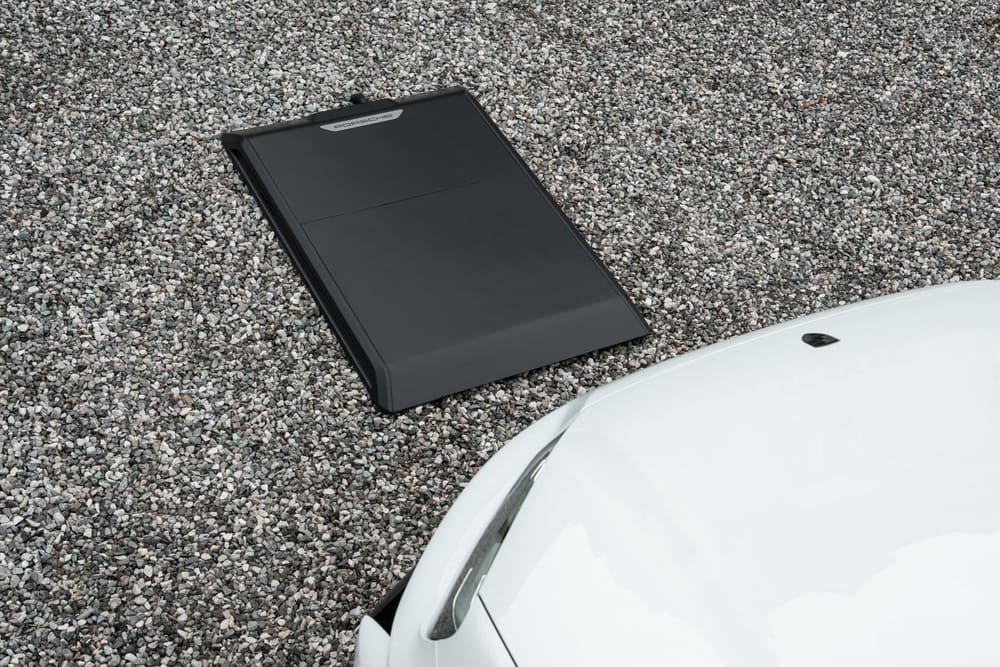
At its core, Porsche Wireless Charging works like large-scale inductive charging. Energy is transmitted through the air by a magnetic field between a floor plate on the ground and a receiver unit mounted in the vehicle. Unlike a phone charger, though, this system has to handle vehicle alignment, ground clearance, weather exposure and meaningful charging power in everyday use.
That is why Porsche’s solution is deliberately focused on a specific use case: predictable charging at home. The floor plate can be installed in a garage, under a carport or on an open outdoor parking space, then connected to the mains. Porsche also states that the plate is connected to the internet via LTE or Wi-Fi, which suggests the system is designed not just for power transfer, but also for software-based monitoring and updates.
Power, efficiency and packaging
The key number is simple: Porsche Wireless Charging supports a maximum charging power of up to 11 kW. Porsche also reports an efficiency of over 90 percent. This makes the system especially interesting from a technical point of view. However, wireless charging only makes sense for everyday EV use if energy losses remain low. As a result, drivers can enjoy more convenience without wasting too much energy.
In addition, the hardware is very compact for a wireless charging system. According to Porsche, the floor plate measures 117 by 78 by 6 centimetres. This low-profile design is important because drivers do not want a large charging ramp in their garage. Instead, they want a simple system that fits into their daily parking routine. Therefore, the compact design makes wireless charging more practical for everyday use.
Why the Cayenne Electric is the right first application
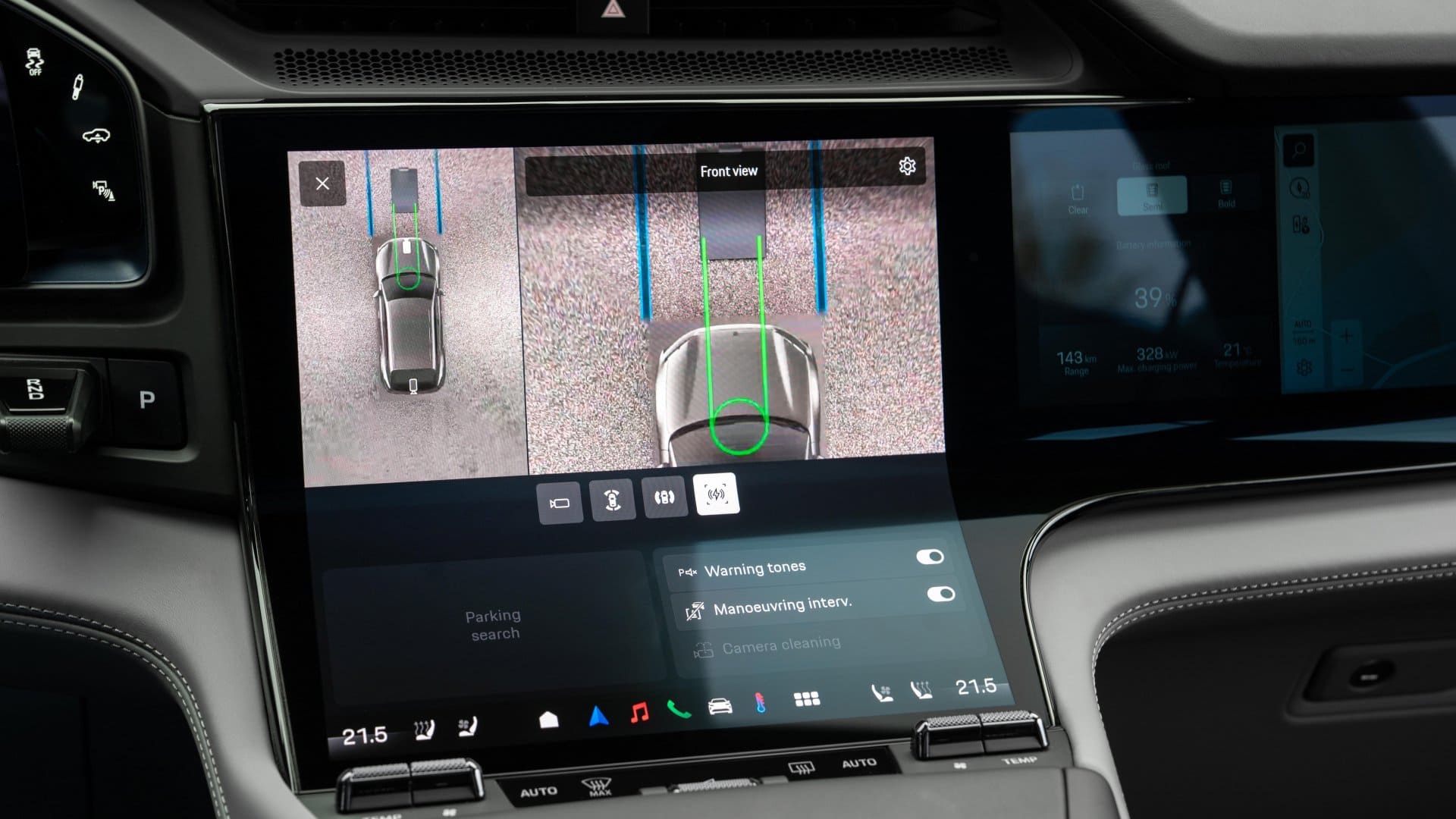
The first compatible model will be the Cayenne Electric. According to Porsche, the receiver unit is located underneath the car, between the front wheels. It is also protected against stone chips and weather conditions. To start charging, the driver simply parks the vehicle above the charging plate. The energy is then transferred wirelessly over a short distance.
In addition, the Cayenne automatically lowers itself during charging. This is important because the distance between the car and the charging plate affects efficiency. However, Porsche still reports an efficiency of over 90 percent with an air gap of 12 to 18 centimetres. This shows that Porsche has focused not only on charging power but also on precise alignment and smart system control. As a result, wireless charging becomes more efficient and practical for everyday use.
Safety is the make-or-break factor
If you are wondering whether parking precision and safety make Porsche Wireless Charging impractical, Porsche’s answer is clearly no. The floor plate includes motion detection and foreign object detection for metallic objects. Charging is interrupted automatically if a living being enters the area between vehicle and plate, or if a metal object lying on the plate begins to heat up.
That matters more than headline performance. Inductive charging in a production car has to work around pets, children, tools, wet surfaces and daily garage clutter. In other words, the real breakthrough is not that Porsche can send energy through the air, but that it can do so with the safety logic required for normal household use.
What it means in real life for drivers
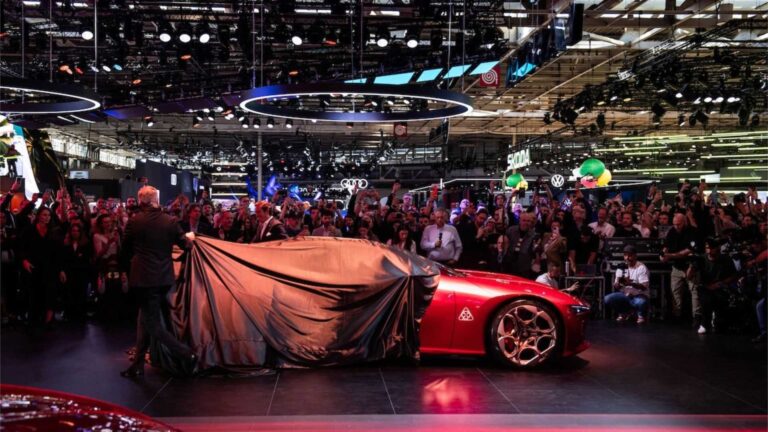
Porsche plans to start sales of the floor plate from 2026 through Porsche Centres and online in the Porsche Shop in Europe. The technology was also demonstrated at IAA Mobility in Munich, where a prototype with luminous paint visualised the system in a way visitors could immediately understand. That public demonstration matters because wireless charging can sound abstract until you see how little driver interaction it actually needs.
For owners, the attraction is simple: come home, park, and charge without touching a cable. For enthusiasts who want to stay close to the brand before the Cayenne Electric arrives, more on renting a Porsche in Germany offers a practical way to experience the marque on the road today. And if you are comparing Porsche technologies more broadly, tip: explore a Porsche driving experience gives useful context on how the brand translates engineering into feel, not just numbers.
Who should care about Porsche Wireless Charging
If you are evaluating whether this is worth caring about, avoid one common mistake: judging the system by DC fast-charging standards. Porsche Wireless Charging is not trying to replace long-distance charging stops or beat high-power cable charging on peak speed. It is a comfort technology for recurring home charging, where zero-effort use can matter more than plugging in a few seconds faster.
A second mistake is assuming wireless charging is just a gimmick because it looks invisible. The hard facts say otherwise: a production-intent system, up to 11 kW, over 90 percent efficiency, integrated safety functions and a defined rollout with the Cayenne Electric from 2026. If you want the broader performance context around modern high-end vehicles, more on sports cars is a useful next step beyond charging tech alone.
Porsche Wireless Charging is less about spectacle and more about making home charging feel effortless.
Conclusion
Porsche Wireless Charging matters because it solves a boring but important problem: making home charging easier. Instead of chasing theatre, Porsche is focusing on a cleaner routine with automatic start, no cable handling and the kind of safety functions a real production system needs.
That makes the technology feel credible rather than futuristic for its own sake. With up to 11 kW, more than 90 percent efficiency and the Cayenne Electric as the first application, Porsche is positioning wireless charging as a genuine comfort innovation for everyday ownership.
Frequently asked questions
How does Porsche Wireless Charging work?
Porsche Wireless Charging transfers energy through a magnetic field between a floor-mounted charging plate and a receiver integrated into the vehicle. The Cayenne Electric positions itself above the plate, lowers automatically, and then starts charging without a cable. According to Porsche, the system delivers up to 11 kW and is designed for home use.
Which Porsche will get wireless charging first?
The first compatible model is the Cayenne Electric. Porsche has stated that the SUV will be the first model line available with the necessary wireless charging hardware and pre-installation. That makes it the launch vehicle for the brand’s production-ready inductive charging system.
How efficient is Porsche Wireless Charging?
Porsche cites an efficiency of over 90 percent for the system. That matters because wireless charging only makes sense in daily use if convenience does not come with an excessive energy penalty. In practice, that puts the technology clearly into the serious home-charging category rather than the gadget category.
When will Porsche Wireless Charging be available?
Porsche says the floor plate will go on sale from 2026 through Porsche Centres and the Porsche Shop in Europe. The market launch is tied to the Cayenne Electric as the first compatible vehicle. Availability beyond that will depend on market rollout and model support.
Sources & further reading
- Porsche Newsroom: Cayenne Electric – Questions & Answers
- Porsche Newsroom: Tech for the people – Porsche at IAA Mobility in Munich
- IAA Mobility Weekly 36/2025
- Porsche Newsroom PDF: Porsche Wireless Charging
- Title Picture: Cayenne Turbo Electric, Wireless Charging, München, 2026, Porsche AG