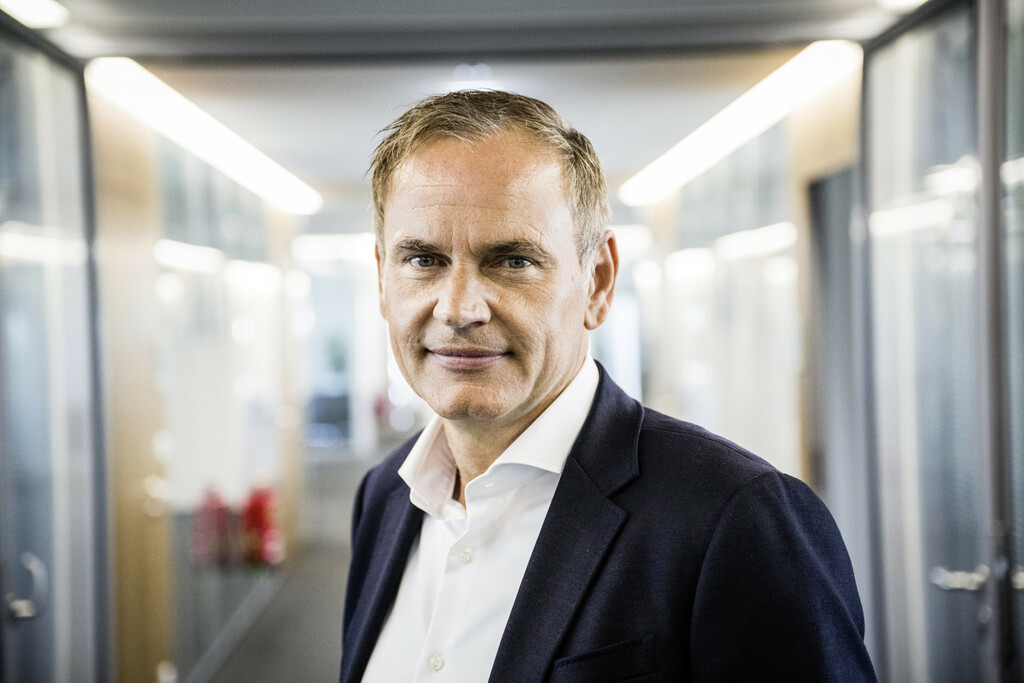

Oliver Blume is at the center of a defining Volkswagen moment. In Q3 2026, VW fell deep into the red, exposing how hard China, global pricing pressure, Porsche-related writedowns and restructuring needs are hitting the Group at the same time.
For anyone following the industry, this is more than a bad quarter. It is a sharp warning that Volkswagen now has to fix costs, strengthen its market position and rethink execution under growing competitive pressure.
| Facts & Figures | |
|---|---|
| Group result after tax in Q3 2026 | -€5.822 bn |
| Operating result in Q3 2026 | -€5.860 bn |
| Porsche goodwill impairment | €6.4 bn |
| Worldwide vehicle sales in 9M 2026 | 5.9 million |
| Operating return on sales before special items in 9M 2026 | 3.8% |
Source: Volkswagen Group: Nine-month results underline urgent need for action
Oliver Blume and VW’s brutal third-quarter reset
Oliver Blume is facing one of the most difficult periods of his time at Volkswagen. In the third quarter of 2026, the Group reported a net loss of 5.822 billion euros. In addition, the operating result was minus 5.860 billion euros. These figures show that Volkswagen is facing serious financial challenges. However, the problems go beyond these losses. For example, the company is struggling with high costs, strong competition in China and increasing price pressure around the world. As a result, Volkswagen must find ways to improve its financial performance.
One of the main reasons for the poor quarterly results was a 6.4 billion euro goodwill impairment related to Porsche. Although this is an accounting charge and does not directly reduce the company’s cash, it is still an important warning sign. This is because it reflects lower expectations for Porsche’s future business value. Furthermore, it shows how difficult the current market situation has become. Since Volkswagen has long depended on its successful premium brands, this development is especially important. Therefore, the impact goes beyond the financial figures and also raises questions about the Group’s future strategy.
Why the numbers matter beyond one bad quarter
The latest figures also show that the pain is not limited to one isolated quarter. Across the first nine months of 2026, Volkswagen sold 5.9 million vehicles worldwide, while the operating return on sales before special items reached 3.8 percent. That is not collapse territory for a global volume manufacturer, but it is well below the level a group of Volkswagen’s scale needs if it wants to fund transformation, defend margins and keep its brands sharp at the same time.
This is why the latest statements from Volkswagen Group’s nine-month results and the updated view shared by finance chief Arno Antlitz should be read together. The company is not describing a short-term wobble. It is describing a structural challenge shaped by higher competitive intensity, weaker pricing power and a market environment that no longer forgives inefficiency.
From boardroom pressure to the road: what enthusiasts can do now
For enthusiasts, there is also a practical takeaway. When boardroom pressure rises at groups that include performance icons, the spotlight on brand identity gets sharper too. If you want to experience what strong positioning still feels like on the road, DRIVAR opens the door to curated sports car experiences with clear booking, professional handover and a focus on safe, memorable driving moments rather than dealership routine.
That makes the right offer more relevant than ever, especially when brands like Porsche remain central to the wider Volkswagen story. If reading about Oliver Blume has you thinking less about balance sheets and more about what a focused driver’s car still means in practice, a tailored experience can bring that perspective back to the asphalt.
China, price pressure and the strategic squeeze
China sits at the center of the challenge. Volkswagen has repeatedly underlined the importance of the market, yet competition there has become faster, tougher and more local in character, especially in electric vehicles. Even when new products gain traction, that momentum now has to fight through heavy discounting and a competitive field that keeps moving.
At the same time, the Group is dealing with rising price pressure worldwide. That matters because a company of Volkswagen’s size cannot simply rely on unit volume if margins are being squeezed from multiple directions. Under Oliver Blume, the balancing act is therefore unusually complex: push product competitiveness, sharpen the China strategy and protect brand value, all while investors and employees expect visible progress.
Porsche, job cuts and the cost question
The other major issue is cost. Once a quarter swings this far into the red, restructuring and staffing questions become unavoidable, and talk of job cuts moves from rumor to a recurring part of the broader debate. Volkswagen’s own messaging leaves little doubt that management sees an urgent need for action, which means efficiency measures will remain a central part of the story in the months ahead.
That creates a difficult backdrop for premium and performance brands inside the portfolio, including Porsche. A premium badge can support margins only if customers still see clear product distinction and pricing discipline. When market competition intensifies and internal costs remain high, brand positioning stops being a marketing topic and becomes a financial one.
Oliver Blume is entering a season of decisions at Volkswagen, and the Q3 loss is only the headline.
Conclusion
Oliver Blume is going through an autumn of decisions at Volkswagen. The third-quarter loss is harsh, but the more important takeaway is the message behind it: the Group has to sharpen its cost base, its China strategy and its brand positioning at the same time.
That is a difficult combination for any carmaker, even more so for one carrying volume brands, premium brands and performance icons under one roof. The next phase will show whether Volkswagen can turn urgent action into a clearer competitive edge rather than just a shorter-term defensive response.
Frequently asked questions
Why did Oliver Blume’s Volkswagen post a loss in Q3 2026?
The key driver was a non-cash goodwill impairment of 6.4 billion euros related to Porsche. At the same time, Volkswagen pointed to rising global price pressure, intense competition and the need for urgent cost action. That combination pushed both operating profit and net profit deep into negative territory for the quarter.
How bad was Volkswagen’s Q3 2026 result under Oliver Blume?
Volkswagen reported a group result after tax of minus 5.822 billion euros for the July to September 2026 period. Operating result in the same quarter came in at minus 5.860 billion euros. Those are headline numbers that underline how serious the current pressure has become.
What role does China play in Oliver Blume’s Volkswagen strategy?
China remains one of Volkswagen’s most important markets, but it is also one of the toughest. Competition is especially intense in electric vehicles, local players are strong and pricing pressure is high. That is why China strategy is now central to any turnaround narrative around Oliver Blume.
Is Volkswagen cutting jobs under Oliver Blume?
Volkswagen has made clear that its current results increase the pressure to lower costs and improve efficiency. In practice, that keeps the topic of job cuts and broader restructuring firmly in focus. The company’s own messaging around the nine-month results stressed an urgent need for action.