
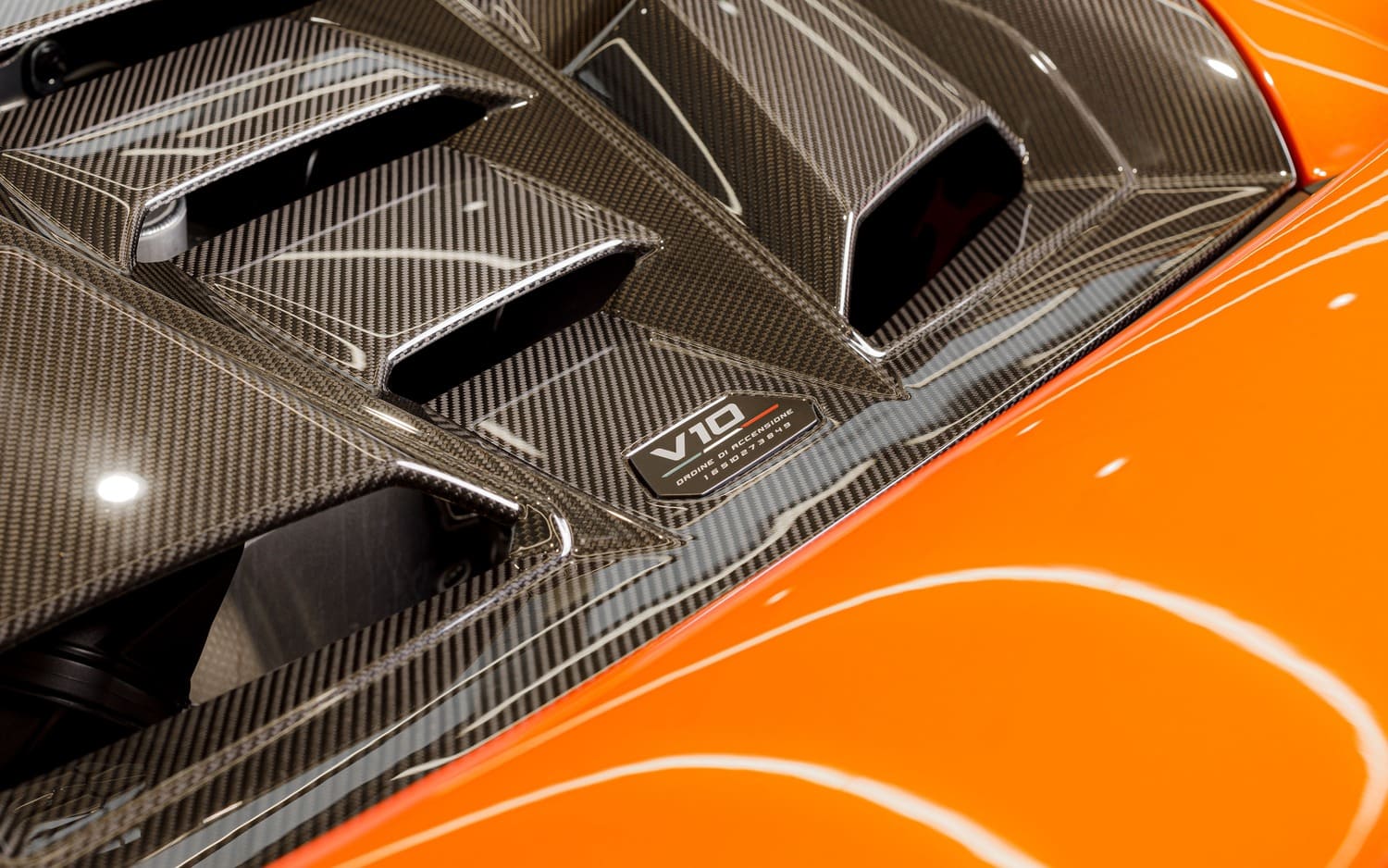

Carbon Fibre is one of the most talked-about materials in modern performance cars, but not every carbon part delivers the same value. If you want to understand why supercars use it, what CFRP actually is, and where the real benefits and compromises lie, this guide gives you the buying perspective that matters.
For sports car enthusiasts, the key question is not whether carbon fibre looks impressive, but whether it improves the structure of the car. Once you know where the material is used and why, it becomes much easier to judge whether a carbon-heavy sports car is a genuine engineering step forward or mostly a styling exercise.
| Facts & Figures | |
|---|---|
| Automotive material term | Carbon-fibre-reinforced plastic (CFRP) |
| Lamborghini Aventador carbon monocoque introduction | 2011 |
| McLaren 720S chassis concept | Carbon Fibre Monocage II |
| Porsche 918 Spyder production volume | 918 units |
| BMW i3 construction principle | CFRP passenger cell |
Source: Lamborghini – Carbon Fiber
What carbon fibre really means in a sports car
Carbon Fibre is one of the most important materials in modern high-performance cars. However, many people do not fully understand how it works. In the automotive industry, it is usually called carbon-fibre-reinforced plastic (CFRP). This material combines carbon fibres with a special resin. As a result, it is very light but also extremely stiff. Because of these properties, it is especially useful for sports cars and supercars.
However, not every carbon-fibre part improves a car’s performance. For example, carbon-fibre mirror caps or dashboard panels often serve mainly as design elements. In contrast, the material has a much greater effect when used in the chassis, monocoque or passenger cell. This is because these parts are important for the car’s overall structure. As a result, Carbon Fibre can help reduce weight and improve handling. In addition, it can support better acceleration, braking and cornering. Therefore, the material is not only about appearance but also plays an important role in driving performance.
Why supercars use carbon fibre so often
The reason manufacturers keep coming back to CFRP is simple: performance cars are extremely sensitive to mass and rigidity. Lower weight helps almost every dynamic discipline at once, while a stiffer structure gives the suspension a more stable foundation and helps steering inputs feel cleaner and more precise.
You can see that logic in several landmark cars. Lamborghini introduced the carbon monocoque of the Aventador in 2011, McLaren built the 720S around its Carbon Fibre Monocage II, and BMW used a CFRP passenger cell in the i3 as part of its LifeDrive concept. Even though those cars serve very different purposes, they all show the same engineering principle: use the material where structural efficiency matters most.
That is also why Porsche’s engineering overview of carbon treats the material as a functional lightweight solution rather than a styling gimmick. In a serious driver’s car, Carbon Fibre earns its place when it changes the architecture of the vehicle, not only the optics.
The real advantages of carbon fibre
The biggest advantage of Carbon Fibre (CFRP) is its combination of low weight and high stiffness. Because of this, it can improve a car’s handling and overall performance. For example, a lighter car can react faster when changing direction. In addition, Carbon Fibre can improve braking feel and body control. As a result, sports cars can feel more responsive without needing extra engine power. Furthermore, lower weight can also improve efficiency. Therefore, the material is especially useful for high-performance road cars and track-focused vehicles.
Another important advantage is its flexibility in vehicle construction. For instance, engineers can use Carbon Fibre to build strong and lightweight passenger cells, chassis structures and roofs. At the same time, they can design these parts to handle forces in specific areas. As a result, the car can remain strong without becoming too heavy. This is also why carbon monocoques have become popular in the supercar industry. Moreover, every kilogram saved can help improve performance, efficiency and responsiveness. Consequently, Carbon Fibre plays an important role in modern sports car engineering.
In addition, Carbon Fibre has a strong connection to motorsport and advanced technology. For many buyers, visible carbon-fibre parts make a car look more sporty and exclusive. However, appearance is not the most important benefit. Instead, buyers should check whether the material actually improves the car’s structure or reduces weight. For example, Carbon Fibre can help improve weight distribution and lower the centre of gravity. Because of this, the car may offer better balance and handling. On the other hand, decorative carbon-fibre parts may have little effect on performance. Therefore, it is important to understand how the material is used. Overall, Carbon Fibre is most valuable when it improves real driving performance rather than simply adding a sporty appearance.
The downsides buyers should think about
The weakness of carbon fibre is not performance, but cost and complexity. CFRP parts are generally more expensive to design, tool, manufacture and inspect than comparable steel or aluminum parts. That is one reason the material remains common in premium sports cars and limited-production models rather than mass-market performance cars.
Repairability is another concern buyers should not ignore. Damage can be more difficult to assess than a simple dent in metal, and repairs often require specialist processes, training and equipment. From an ownership perspective, a car with significant structural CFRP content may demand more careful accident assessment and potentially higher repair bills.
There is also a common buyer mistake: assuming every carbon part is a meaningful performance upgrade. Decorative trim, mirror caps, engine covers or interior pieces may save little weight in real terms. If the car uses carbon only cosmetically, the ownership story is different from a car built around a true carbon tub or CFRP passenger structure.
From theory to driving experience
If you want to experience what lightweight engineering does to the feel of a performance car, the best approach is not reading a brochure but driving the right machines back to back. A structurally focused supercar communicates its stiffness and immediacy through steering response, body control and the way the chassis reacts under load.
That makes real-world experience especially valuable with brands that have invested heavily in carbon construction. Lamborghini’s own carbon fibre technology overview highlights how deeply the material is tied to the company’s engineering identity, and McLaren’s 720S is a textbook example of carbon architecture shaping the whole car. If you want to move from theory to seat time, DRIVAR gives you a practical route to drive, compare and understand these differences in the environment that suits you best.
How to judge carbon fibre when buying a sports car
When you assess a sports car with carbon content, start with the structure. Ask whether the car uses CFRP in the monocoque, passenger cell, roof, tub or key load-bearing components. That tells you far more than the appearance of exposed weave on secondary surfaces.
Then consider the intended use of the car. For frequent road miles, repair considerations and insurance implications may matter more than the final few kilograms of weight saving. For high-performance driving and track use, the balance shifts toward stiffness, precision and overall chassis response.
Finally, separate engineering substance from showroom theatre. The Porsche 918 Spyder, limited to 918 units, is one example of a halo car where advanced materials supported a broader performance concept rather than acting as decoration alone. That mindset is useful whenever you compare expensive performance cars: judge Carbon Fibre by what it does, not just by how it looks.
Carbon fibre matters most when it shapes the structure of the car, not just the look of it.
Conclusion
Carbon Fibre is at its most convincing in sports car engineering when it is used as a structural material rather than a visual statement. Its core strength is the combination of low weight and high stiffness, which can deliver a real gain in handling precision, response and overall driving dynamics.
That does not make it automatically superior in every context. Higher production cost, more complex repair scenarios and the risk of paying extra for cosmetic parts mean buyers should look past the weave and into the architecture of the car.
If you want the real value of CFRP, focus on cars where the material defines the monocoque, tub or passenger cell. That is where carbon fibre stops being a design talking point and becomes a genuine performance tool.
Frequently asked questions
What is carbon fibre in cars?
In automotive engineering, carbon fibre usually means carbon-fibre-reinforced plastic, or CFRP. It is a composite material made from carbon fibres embedded in a resin matrix, which allows engineers to combine low weight with high stiffness. That is why it is used in structural parts, tubs, roofs, seats and selected body panels.
Why do supercars use carbon fibre so often?
Supercars benefit more than most cars from lower mass and higher structural rigidity. A lighter and stiffer structure can improve acceleration, braking response, steering precision and suspension control at high speed. That makes carbon fibre especially valuable when it is used in the core structure rather than only as a visual trim material.
Is carbon fibre always better than aluminum or steel?
No, not in every application. Carbon fibre can offer major advantages in stiffness-to-weight, but it is also more complex and expensive to manufacture and repair. For many cars, aluminum or steel remains the smarter choice in cost, scalability and day-to-day serviceability.
Are visible carbon parts worth it on a sports car?
Sometimes yes, but it depends on where the material is used. A structural CFRP tub or passenger cell can deliver meaningful engineering benefits, while decorative covers mainly change appearance and only occasionally save much weight. If you care about driving substance, ask whether the carbon part is structural, semi-structural or purely cosmetic.