Cybercab: Tesla’s Robotaxi heads to Grünheide
 By Florentina Blakaj
7 min read
Cybercab is becoming more than a Tesla design statement: it is now a real manufacturing story for Germany. Tesla’s dedicated Robotaxi already operates within its U.S. service network, and Grünheide is now lined up for a major expansion tied to planned Cybercab production from 2029.
That matters because the project combines a new vehicle format, autonomous ride-hailing software and a 3 billion euro factory investment in one move. For anyone watching the future of mobility, the signal from Brandenburg is hard to ignore.
| Facts & Figures | |
|---|---|
| Vehicle type | Tesla Robotaxi |
| Layout according to Tesla | 2 seats |
| Control concept | No steering wheel, no pedals |
| Current deployment | USA, within Tesla’s Robotaxi service |
| Announced Grünheide investment | 3 billion euros |
| Germany production start | 2029 planned |
Source: RBB24: Tesla announces 3 billion euro investment in Grünheide
What the Cybercab actually is
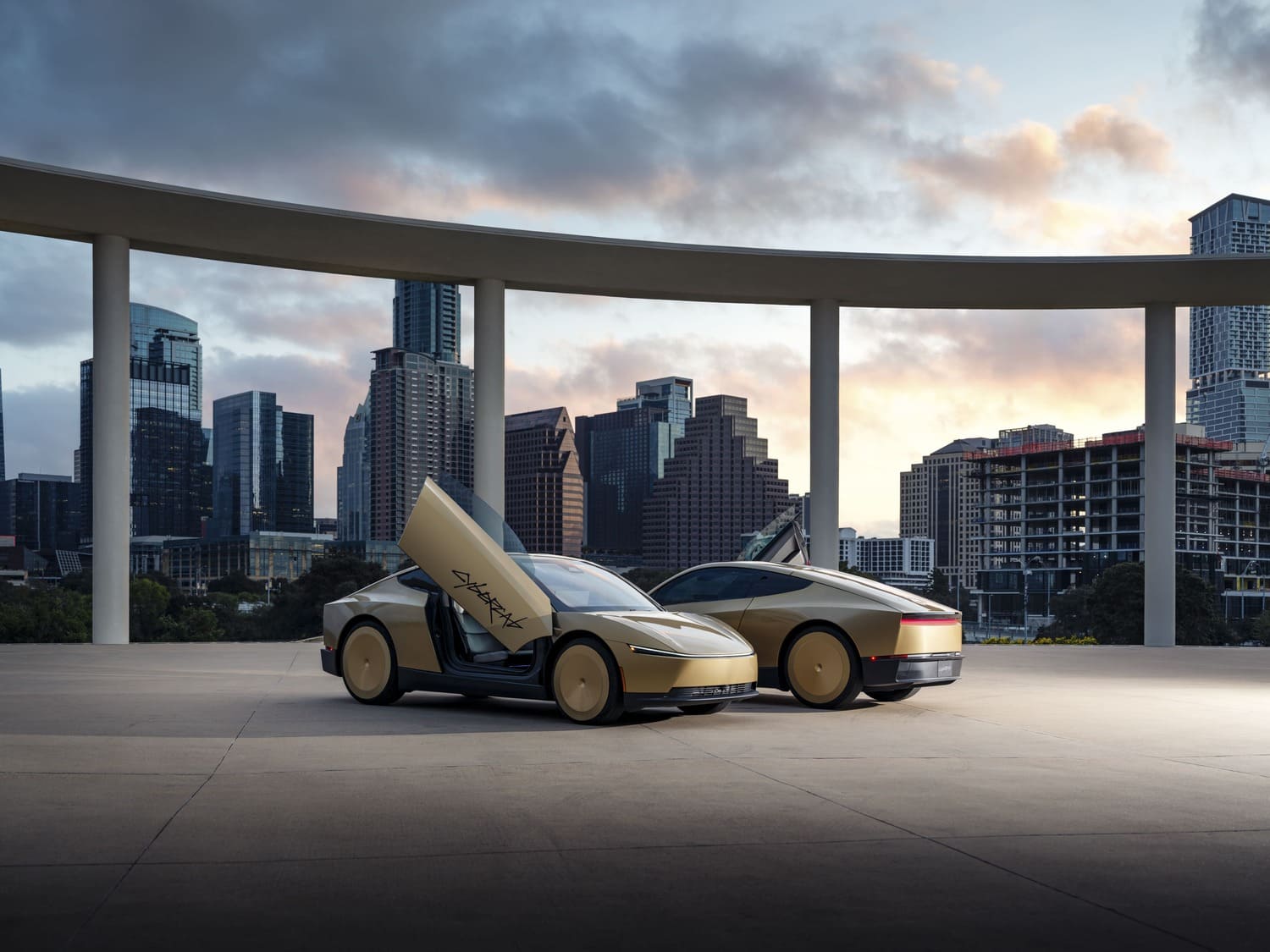
The Tesla Cybercab represents an important step towards autonomous driving. Until now, Tesla has mainly focused on developing self-driving software. However, the company is now also working on a vehicle designed specifically for autonomous transport. For example, the Cybercab has only two seats and comes without a steering wheel or pedals. As a result, it is very different from traditional passenger cars. In addition, Tesla wants to combine autonomous technology, vehicle production and transport services. Therefore, the Cybercab is not just another electric car but part of a larger mobility concept.
Furthermore, Tesla presents the Cybercab as part of its planned fully autonomous Robotaxi fleet. Instead of focusing on private car ownership, the vehicle is designed to transport passengers without a human driver. For example, the interior features a large touchscreen, a compact two-seat cabin and space for luggage. At the same time, traditional driving controls are completely missing. Because of this, the Cybercab offers a different approach to vehicle design. Moreover, its simple interior focuses on passenger comfort and ease of use. Overall, the Tesla Cybercab shows how the company imagines the future of autonomous mobility. However, its wider use will depend on the successful development and approval of fully autonomous driving technology.
Where Cybercab is already operating
If you are asking where Cybercab is already real and not just a concept, the answer is the United States. Tesla says Cybercab rides are currently available in limited areas of Austin, Texas, while the broader Tesla Robotaxi service already runs in multiple U.S. cities including Austin, Dallas, Fort Worth, Houston, Miami, Orlando, San Antonio and Tampa. That is an important nuance, because Tesla’s wider Robotaxi network also uses Model Y vehicles.
This limited real-world deployment gives the Cybercab a different status from many autonomy projects that remain stuck in prototype form. Tesla is already framing it as an operating service vehicle, and recent company updates indicate that production has begun and that deployment into the Robotaxi fleet has started in Austin. For readers in Europe, that does not yet mean local availability, but it does mean the vehicle has moved beyond a show-car phase.
Why Grünheide is the real Germany angle
For Germany, the biggest development is not on the road yet but at the factory. According to RBB24’s report on Tesla’s Grünheide expansion, Tesla wants to invest 3 billion euros in the site, with the Cybercab central to that next step. The report says a new production hall is set to be built from next year, and a production start for 2029 is the current target.
That turns Cybercab into a manufacturing story for Brandenburg as much as a mobility story for Tesla. Grünheide, officially known as Gigafactory Berlin-Brandenburg, has so far been defined mainly by high-volume EV output for Europe. If Tesla follows through on the announced plan, the site would gain a second strategic identity: not just building electric cars, but preparing to build autonomous fleet vehicles as well.
From an industrial perspective, that is the most relevant angle for the German market. A planned robotaxi line means factory investment, a new building, associated infrastructure and a long lead time toward serial production. It also suggests that Tesla sees Europe, and Germany in particular, as important enough to anchor future autonomous-vehicle manufacturing locally rather than serving the region only from U.S. plants.
What happens next
The timeline is ambitious, but it is not vague. The reported plan points to construction on a new hall beginning in 2027 and a targeted production launch in 2029. That leaves enough time for approvals, plant build-out and process integration, but it also underlines that Cybercab in Germany is still a medium-term project rather than an immediate market launch.
There is another important caveat for readers following the story from a regulatory perspective. RBB24 notes that there is still no EU approval for the Cybercab at this stage. So while the industrial commitment looks increasingly concrete, road use in Europe remains a separate question shaped by type approval, safety validation and the broader legal framework for autonomous mobility.
Why car enthusiasts should care
At DRIVAR, we normally focus on cars you can experience with your own hands on the wheel, from supercars on the road to focused track-day machinery. The Cybercab points in the opposite direction: no steering wheel, no pedals, no driver input at all. That contrast is exactly why it is so interesting for enthusiasts, because it sharpens the question of what future mobility will feel like when the machine becomes the chauffeur.
For readers who still want the analogue side of performance and emotion, our sports car experiences at DRIVAR remain about control, sound and direct feedback. But news like this matters even in that context, because the market is broadening: one branch pushes deeper into autonomous transport, while another preserves driving as an experience in its own right. Watching both trends at once gives a clearer picture of where performance culture and mobility are heading.
Cybercab matters because vehicle concept, autonomous software and factory strategy are suddenly becoming one story.
Conclusion
The Cybercab is one of the year’s most compelling mobility stories because product, software and factory strategy are suddenly converging in one project. Tesla is not only defining a dedicated Robotaxi vehicle, but also showing how it wants to industrialize that idea.
For Germany, the decisive point is Grünheide. If the announced plan stays on track, a factory that has been known for electric-car production could also become a future manufacturing base for robotaxis — and that makes this more than a vehicle reveal. It makes Cybercab a serious industrial signal.
Frequently asked questions
What is the Tesla Cybercab?
The Cybercab is Tesla’s dedicated Robotaxi vehicle. According to Tesla, it is a two-seat autonomous car designed without a steering wheel or pedals and built specifically for app-based driverless rides.
Where is Cybercab already operating?
Tesla says Cybercab rides are currently available in limited areas of Austin, Texas. More broadly, Tesla’s Robotaxi service already operates in several U.S. cities, including Austin, Dallas, Fort Worth, Houston, Miami, Orlando, San Antonio and Tampa, although those fleets also include Model Y vehicles.
Will the Cybercab be built in Germany?
Tesla has announced that Cybercab production is planned for Grünheide in Germany. The reported plan includes a new production building from next year onward and a targeted production start in 2029, subject to the necessary approvals and factory expansion steps.
How much is Tesla investing in Grünheide for Cybercab production?
The announced investment for the Grünheide expansion is 3 billion euros. The money is tied to a new production building and related site infrastructure for the planned Robotaxi program.
Sources & further reading
- Tesla Robotaxi
- Tesla Cybercab FAQ
- RBB24: Tesla announces 3 billion euro investment in Grünheide
- Wikipedia: Gigafactory Berlin-Brandenburg
- Title Picture: Tesla Germany GmbH, 2026