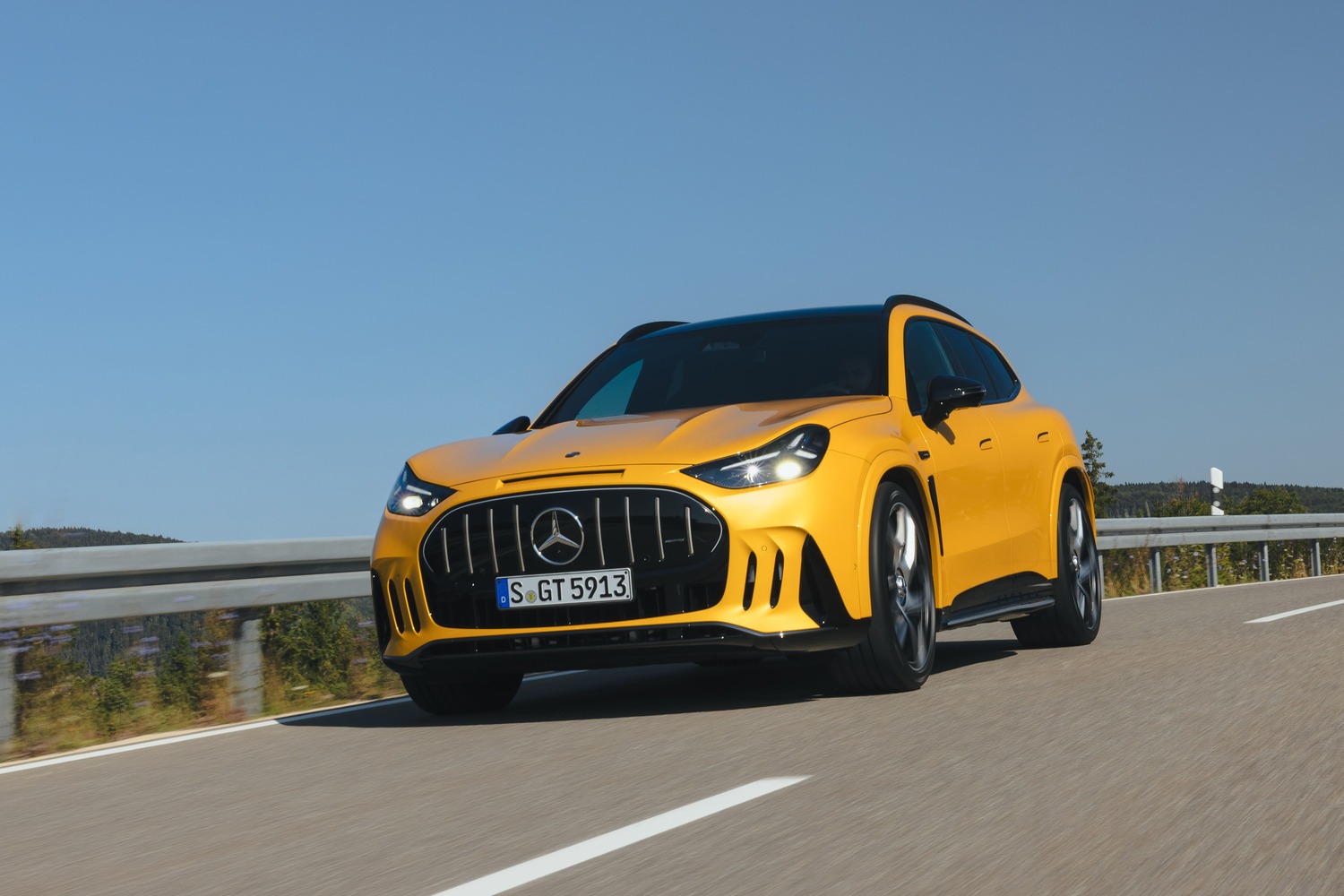

The Mercedes AMG GT SUV is one of the most important new AMG reveals of 2026 because it combines two battery sizes, an 800-volt architecture and up to 700 kilometres of WLTP range in a single electric performance model. Just as importantly, it turns the long-running debate around what an AMG can be into a concrete product story with hard numbers.
Mercedes is pitching the newcomer as a high-tech SUV with genuine sports-car DNA, and the official data backs up that ambition in several areas. According to Mercedes-Benz Media and the official Mercedes-AMG model page, the line-up starts with the GT 53 SUV from 113,050 euros and stretches to a top WLTP range claim of 700 kilometres, supported by exceptionally high DC charging figures for both available batteries.
| Facts & Figures | |
|---|---|
| Usable battery capacity | 106 kWh or 128 kWh |
| Battery system voltage | 800 volts |
| WLTP range | Up to 700 km |
| Max. DC charging power | 600 kW to 710 kW |
| Mercedes-AMG GT 53 SUV starting price | From 113,050 euros |
Source: Mercedes-Benz Media: Mercedes-AMG GT SUV
Mercedes AMG GT SUV arrives with numbers that demand attention
The new Mercedes AMG GT SUV lands with the kind of spec sheet that immediately changes the conversation around electric performance SUVs. Mercedes-AMG confirms two usable battery sizes, 106 kWh and 128 kWh, both based on an 800-volt electrical architecture, with a stated WLTP range of up to 700 kilometres and DC charging quoted at up to 600 kW or 710 kW depending on version.
That matters because AMG is no longer presenting electrification as a compromise that needs explanation. Instead, the Mercedes AMG GT SUV is framed as a technical flagship with repeatable power delivery, very high charging performance and long-distance ability that is meant to fit the brand’s Autobahn image as much as its sprint credentials.
Technical data: 800-volt system, two batteries, very high charging power
The technical data is already quite clear for such a new performance model. According to Mercedes, the high-voltage battery uses directly cooled cylindrical cells and an 800-volt system. As a result, this technology supports both strong performance and fast charging. In addition, the car offers two usable battery capacities: 106 kWh and 128 kWh. Therefore, buyers have a clear choice between the two battery options. While the smaller battery offers strong performance, the larger one provides more capacity.
Charging is also an important feature. Mercedes-AMG states that the 106-kWh battery supports a maximum DC charging power of 600 kW. Meanwhile, the larger 128-kWh battery can reach up to 710 kW. Furthermore, Mercedes claims that the smaller battery can add up to 380 kilometres of WLTP range in just ten minutes. In comparison, the larger battery can add up to 450 kilometres in the same time. Because of this, both battery options offer impressive charging performance. However, AMG does not focus only on high power figures. Instead, the company also wants to make electric performance more practical for everyday driving. Overall, these features show that AMG combines strong performance with fast charging and everyday usability.
Price and range: where the GT 53 SUV fits into the line-up
The most affordable version announced so far is the Mercedes-AMG GT 53 SUV, starting at 113,050 euros. According to Mercedes-Benz, this model comes with a 106-kWh battery. It also offers a WLTP range of 597 to 668 kilometres. Meanwhile, the larger GT SUV models can reach up to 700 kilometres with the 128-kWh battery. As a result, buyers can choose between different battery sizes and driving ranges.
However, the starting price is important for another reason. It shows that AMG wants to attract more customers instead of focusing only on the most expensive models. Although the GT SUV is still a premium vehicle, the entry-level version offers strong features. For example, it combines a good driving range with fast charging technology. Therefore, buyers do not have to choose the most expensive version to enjoy modern electric performance. In addition, AMG wants to make the entry-level model attractive without making it feel like a compromise. Overall, this strategy could help AMG reach a wider group of customers.
Why the Mercedes AMG GT SUV is already controversial
The controversy around the new model is just as important as the technical data. An AMG called GT has historically been associated with low-slung proportions, combustion drama and a very specific emotional profile. Turning that badge into a fully electric SUV is a deliberate break with tradition, and not every AMG fan will accept that shift immediately.
Yet this is exactly why the launch matters. AMG is not simply adding another electric SUV to a crowded market; it is testing how far the brand can stretch without losing its identity. If the car delivers the promised mix of sustained performance, high-speed stability, fast charging and long range, the debate may move from whether an electric AMG SUV should exist to whether this is the form in which AMG remains commercially and technically relevant.
Comparison with the AMG GT 4-Door Coupé
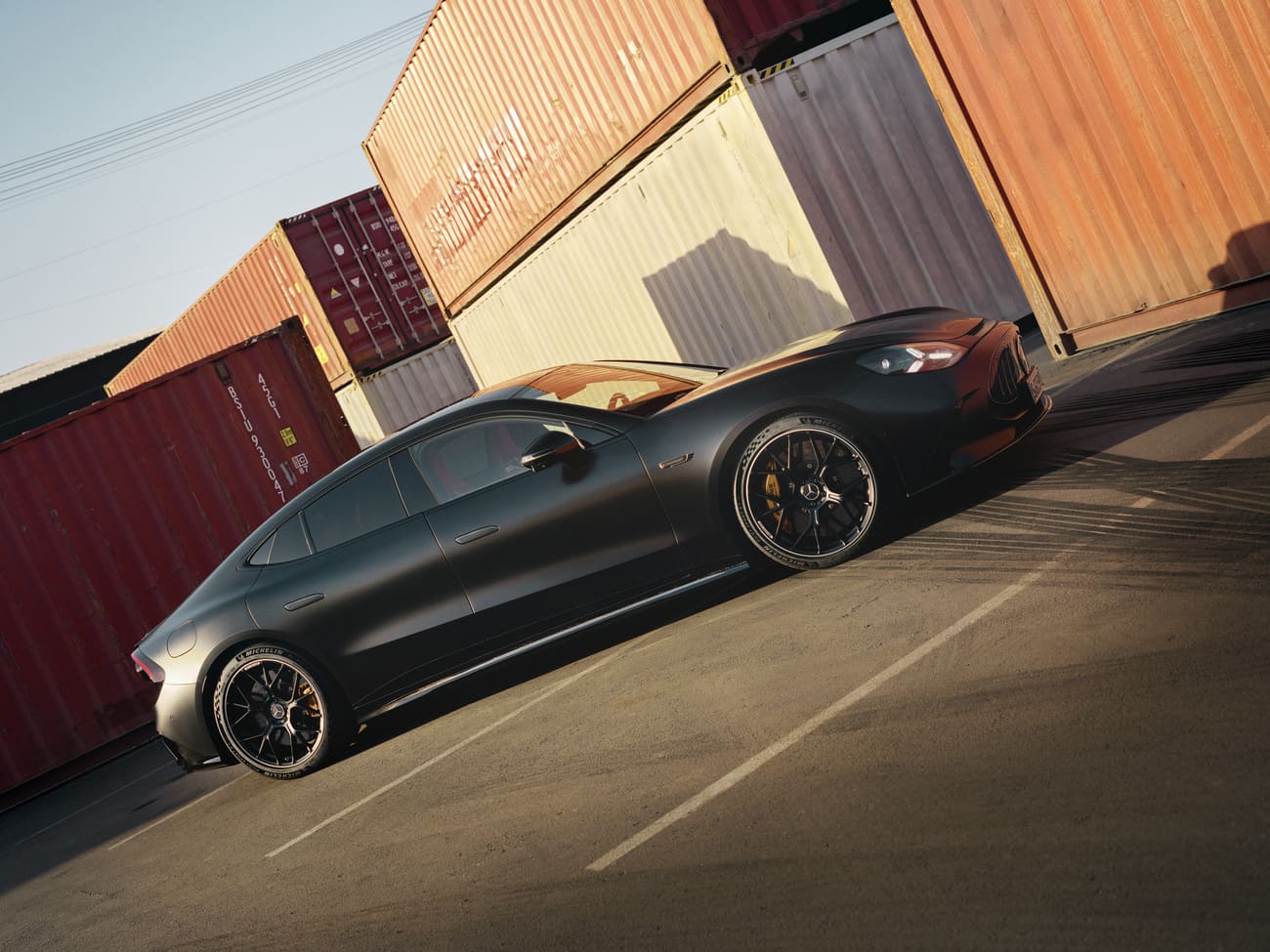
The obvious internal benchmark is the new Mercedes-AMG GT 4-Door Coupé. Mercedes-Benz Media presents that car with the same broader technological direction: three axial-flux motors, an 800-volt battery concept and a strong focus on repeatable power rather than one-shot headline acceleration. In other words, the SUV is not an outlier; it is part of a wider AMG reshaping.
That comparison is crucial for context. The GT 4-Door Coupé still carries the body style and emotional silhouette many enthusiasts associate more naturally with the GT badge, while the SUV translates similar electrical thinking into a taller, heavier and more family-compatible format. Seen that way, the Mercedes AMG GT SUV is less a rebellion against AMG tradition than a parallel branch of the same new electric performance architecture.
What this means for performance-car fans beyond the launch
For readers on DRIVAR, the interesting practical angle is not only what AMG is building next, but what this means for the wider premium performance world. Cars like the GT SUV push customer expectations higher in areas such as charging speed, long-range usability and the everyday side of performance, and that influences how people look at fast road cars they want to drive, hire or experience.
Why this launch matters beyond one single model
The new Mercedes-AMG GT SUV is more than just an experiment. It shows a clear direction for AMG’s future. The car combines new technology, strong performance and a clear brand strategy. For example, it features an 800-volt architecture, two battery sizes and a WLTP range of up to 700 kilometres. These features show that AMG is serious about electric performance cars.
However, not every AMG fan may like the SUV design. This is especially true for drivers who prefer traditional sports cars. Still, the GT SUV follows a clear strategy. It offers impressive technical figures and has a strong position in AMG’s future lineup. In addition, its connection to the new GT 4-Door Coupé shows that AMG is developing a whole family of electric performance cars. Therefore, the GT SUV is not just a single new model. Instead, it represents an important step in AMG’s electric future. As a result, it is one of the most significant electric performance car debuts of the year.
The Mercedes AMG GT SUV is not just another fast EV; it is AMG reorganising its performance identity in full public view.
Conclusion
The new Mercedes AMG GT SUV is one of AMG’s clearest recent product moves because it resets the relationship between performance image and electric engineering. It takes the brand’s future-facing hardware and puts it into a format that is commercially important and technically easy to explain.
The result is a model that will inevitably divide opinion, but for serious reasons rather than superficial ones. AMG is asking buyers to accept that long range, very fast charging and repeatable power delivery can now define a GT just as much as engine character once did.
Frequently asked questions
What is the battery size of the Mercedes AMG GT SUV?
Mercedes-AMG offers the GT SUV with two usable battery sizes: 106 kWh and 128 kWh. Both use an 800-volt architecture, but the larger pack is also the one tied to the headline WLTP range figure of up to 700 kilometres.
How far can the Mercedes AMG GT SUV drive on one charge?
The official WLTP range is up to 700 kilometres, depending on version and battery. In the current official technical overview, the GT 53 SUV is listed with up to 668 kilometres WLTP, while the broader model family reaches the 700-kilometre headline figure.
How fast does the Mercedes AMG GT SUV charge?
Mercedes states maximum DC charging of 600 kW or 710 kW, depending on battery and variant. The brand also says the larger battery can add up to 450 kilometres of WLTP range in ten minutes under ideal conditions, which is one of the key talking points around this car.
How much does the Mercedes AMG GT 53 SUV cost?
Mercedes-Benz Media lists the Mercedes-AMG GT 53 SUV from 113,050 euros. That positions it as the entry point into the new GT SUV line, while still keeping the full AMG branding and the new electric performance platform.
Sources & further reading
- Mercedes-Benz Media: Mercedes-AMG GT SUV
- Mercedes-AMG: GT SUV
- Mercedes-Benz Media: Mercedes-AMG GT 4-Door Coupé
- Wikipedia: Mercedes-AMG GT SUV
- Title Picture: Mercedes-Benz Group AG, 2026