
Boxer engine is one of those engineering terms enthusiasts use with respect and skeptics with a raised eyebrow. This guide explains how the boxer engine works, where its strengths and weaknesses lie, and why Porsche still relies on it when driving dynamics matter more than manufacturing convenience.
The key question is simple: is the boxer engine outdated, or does it still make sense in a modern sports car? If you look beyond production cost and focus on center of gravity, packaging and character, the answer becomes far more interesting.
| Facts & Figures | |
|---|---|
| Carl Benz patented a flat engine | 1896 |
| Porsche 911 launched with a six-cylinder boxer engine | 1963 |
| Opposing cylinder banks in a boxer engine | 2 |
| Typical cylinder counts in passenger cars | 4 or 6 |
| Porsche 911 GT3, 8th generation | 510 PS |
Source: Porsche Newsroom – The flat engine tradition
How a boxer engine works
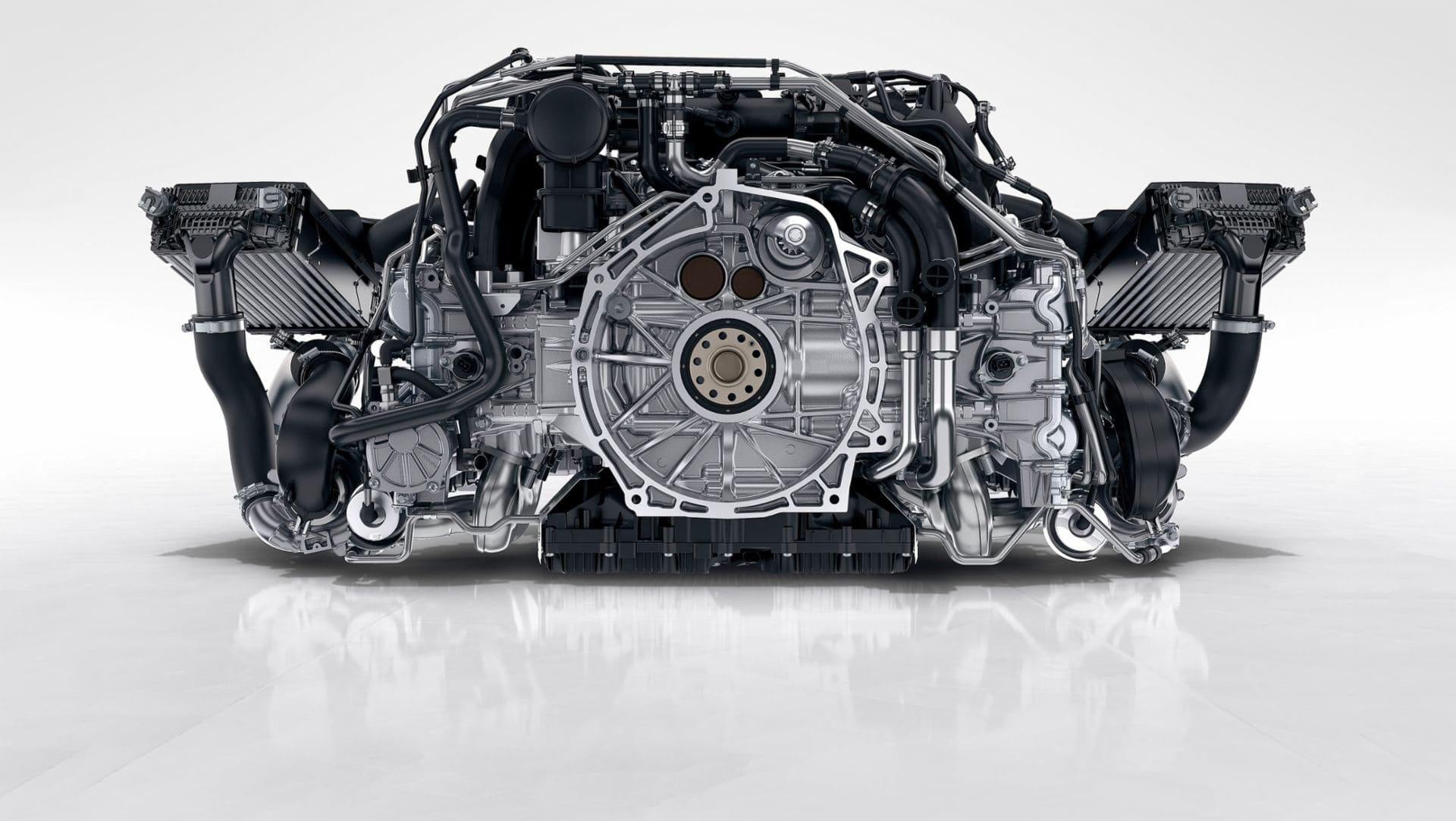
To understand the boxer engine, start with its geometry. A boxer engine places its cylinders in two opposing banks, one on each side of the crankshaft, so the pistons move horizontally rather than vertically. In road cars, the most typical versions are four-cylinder and six-cylinder units, and the whole concept is built around two opposite cylinder banks.
That layout matters because it changes more than the engine bay drawing. A flat engine can sit lower in the chassis than many inline or V-engine alternatives, which helps lower the car’s center of gravity and supports a lower overall vehicle profile. Porsche has long tied that advantage to the identity of its sports cars, and Porsche’s flat-engine tradition explains why the design remains central to the brand.
Why enthusiasts rate the boxer engine so highly
If you are comparing engine concepts for a sports car, the biggest argument for the boxer engine is packaging with purpose. Because the engine is flat, designers can mount it low, which helps reduce weight transfer in corners and gives the driver a more settled, precise feel. That is not marketing folklore; it is one of the clearest mechanical reasons this architecture still matters.
There is also the question of refinement. Opposed pistons help the engine run smoothly, and Porsche highlights the natural balance of the six-cylinder flat engine as a major strength. Add the potential for lightweight construction and efficient gas exchange, and you can also see why boxer engines are often associated with lower fuel consumption in well-developed applications rather than brute-force excess alone.
Where the boxer engine loses points
A good buying guide should also mention the disadvantages of the concept. The boxer motor is more complex to manufacture than an inline engine. This is because it needs two cylinder banks and additional components. As a result, production often requires more engineering work and higher costs. In addition, maintenance can be more difficult because some parts are harder to reach.
For these reasons, the boxer engine is relatively rare in mass-produced cars. Most manufacturers prefer engines that are easier and cheaper to produce. They also want to use the same parts across different models. However, the boxer engine makes this more difficult. Therefore, it is not always the best choice for large-scale production. Still, critics and driving enthusiasts simply focus on different priorities. While manufacturers often value lower costs and efficiency, enthusiasts appreciate better driving dynamics.
Why Porsche never walked away from it
Porsche is the obvious case study because it never treated the flat engine as a nostalgic relic. Carl Benz patented a flat engine in 1896, and Porsche’s own story with the configuration became defining when the 911 launched in 1963 with a six-cylinder boxer engine. That single decision shaped the sound, weight distribution and driving character enthusiasts still associate with the model today.
The layout is not just about heritage, either. Porsche’s own material on Hans Mezger and the 911 flat-six underlines how closely the engine concept is linked to the technical identity of the 911. If you want to experience that character beyond theory, more on renting a Porsche in Germany is the most direct way to feel what a low-slung rear-engined sports car actually does on the road.
What the boxer engine means in real-world performance
A useful benchmark is the 911 GT3 of the eighth generation. According to Porsche’s press material, it delivers 510 PS, which is a reminder that a boxer engine is not some compromised museum piece that survives on sentiment. In the right chassis, it remains fully capable of delivering modern performance with a distinct mechanical character.
If you are weighing whether this engine type still makes sense, avoid one common mistake: judging it only by spreadsheet criteria. A sports car is not just a manufacturing exercise. Readers who want to compare concepts across brands may also find context in more on sports cars and tips on a Porsche driving experience, because engine layout only reveals its value once it is connected to steering feel, balance and confidence behind the wheel.
The boxer engine only looks outdated if cost efficiency is your only metric.
Conclusion
So, is the Boxermotor outdated technology? Only if you judge every engine concept purely by cost, parts commonality and the logic of mass production. By that standard, the boxer engine is undeniably more demanding.
But if you take sports-car dynamics seriously, the answer changes. A lower center of gravity, smooth running and a distinct driving character are not historical curiosities; they are functional advantages that still matter. That is exactly why the boxer engine remains relevant today, especially in a Porsche.
Frequently asked questions
What is a boxer engine and how does it work?
A boxer engine uses two opposing cylinder banks laid flat on either side of a common crankshaft. The pistons move horizontally in opposite directions, which helps balance the engine and gives the layout its characteristic smoothness. In passenger cars, four-cylinder and six-cylinder boxer engines are the most common configurations.
Why does Porsche still use a boxer engine?
Porsche keeps the boxer engine because the layout supports a low vehicle height and a low center of gravity, both of which benefit handling. It also fits the brand’s engineering tradition, especially in the 911, which launched with a six-cylinder boxer engine in 1963. In other words, Porsche uses it because the layout still offers real dynamic advantages, not just nostalgia.
Is a boxer engine outdated compared with inline or V engines?
Not necessarily. If you judge engines mainly by manufacturing cost, packaging commonality and large-scale production efficiency, the boxer can look old-fashioned. But if you care about balance, center of gravity and sports-car character, it remains a technically valid and highly distinctive solution.
What are the disadvantages of a boxer engine?
The biggest drawback is complexity in manufacturing. A boxer engine has two cylinder banks and associated components, which usually means more effort and more parts than a comparable inline engine. That can make development, assembly and servicing more demanding.