
The Brabus Bodo is BRABUS’ first coachbuilt supercar and, at the same time, a rolling tribute to founder Bodo Buschmann. Officially, the car pairs a hand-built 5.2-liter V12 biturbo with 1,000 hp, 1,200 Nm and a stated top speed of 360 km/h, while its name deliberately ties the project to the man who built the brand.
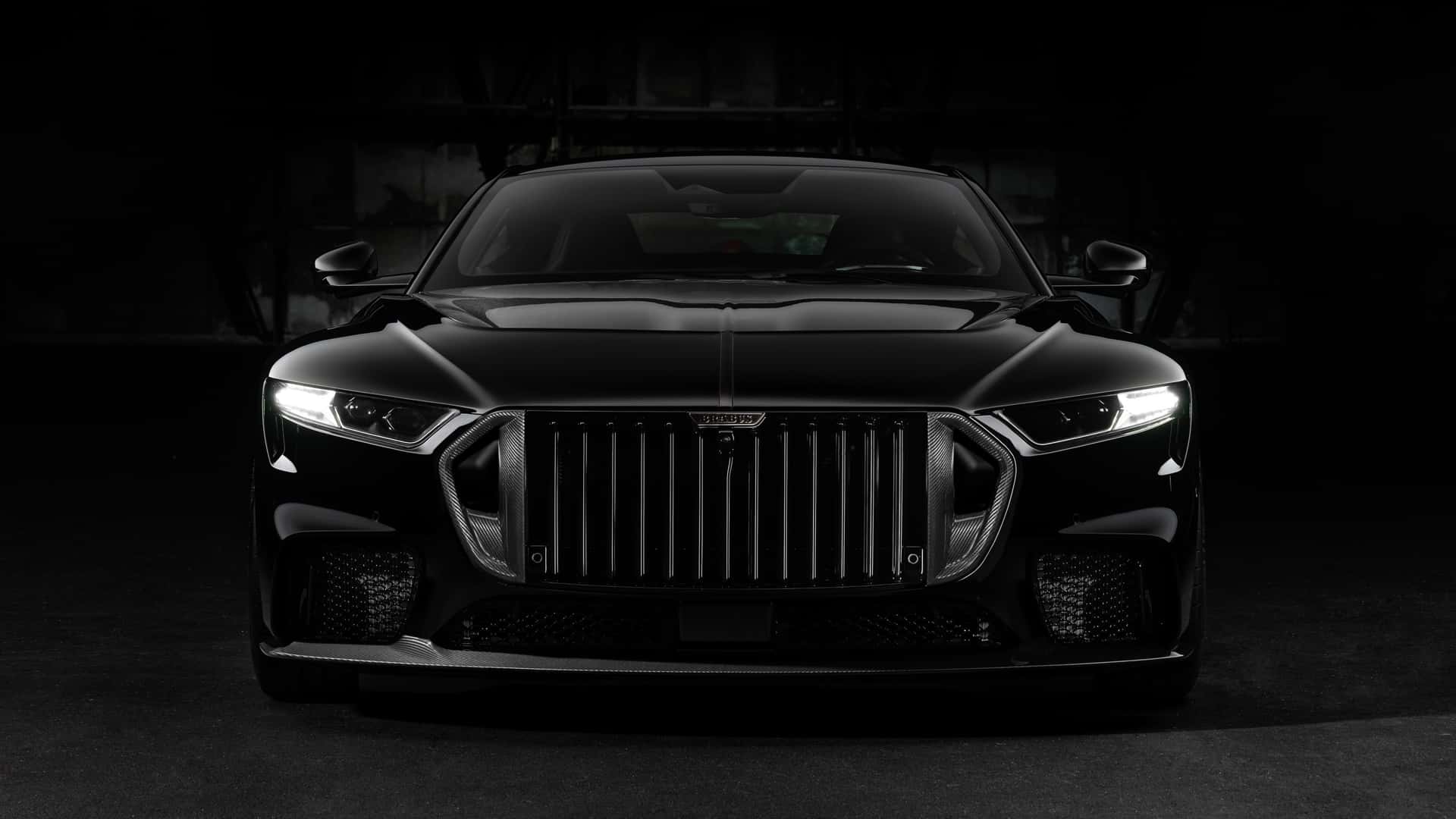
Some cars arrive as products. Others arrive like a statement of intent. The Brabus Bodo belongs in the second group: low, dark, long-legged and unmistakably designed as a grand tourer rather than a stripped-out track toy, with BRABUS itself presenting it as a 2+2 coupe shaped around speed, long-distance comfort and family legacy.
| Facts & Figures | |
|---|---|
| Model significance | First coachbuilt BRABUS supercar |
| Engine | 5.2-liter V12 biturbo, hand-built |
| Output | 735 kW / 1,000 hp |
| Maximum torque | 1,200 Nm |
| 0–100 km/h | 3.0 seconds |
| Top speed | 360 km/h (electronically limited) |
Source: BRABUS BODO official model page
A Name That Means More Than a Badge
At first glance, the name sounds unusually personal for a modern supercar. That is exactly the point. BRABUS positions the Bodo as a tribute to founder Bodo Buschmann, the entrepreneur who co-founded BRABUS in 1977 with Klaus Brackmann before becoming the company’s sole shareholder shortly after registration. Even the brand name itself comes from the first three letters of Brackmann and Buschmann.
That backstory matters because the Brabus Bodo is not framed as just another tuned derivative. It is presented as a legacy project, one that connects the company’s present-day global image with the ambitions of its founder. On its own history pages, BRABUS describes how the brand grew from Buschmann’s early desire to make Mercedes-Benz models more powerful, sportier and more individual, and later expanded into an international brand active in over 100 countries.
The First Coachbuilt BRABUS Changes the Tone
What makes the Brabus Bodo especially important in the brand’s timeline is not only the output figure. It is the format. Independent coverage around the launch and BRABUS’ own presentation point to the same central idea: this is the company’s first coachbuilt model, a major step beyond the traditional image of BRABUS as a high-end tuner and manufacturer focused primarily on existing platforms.
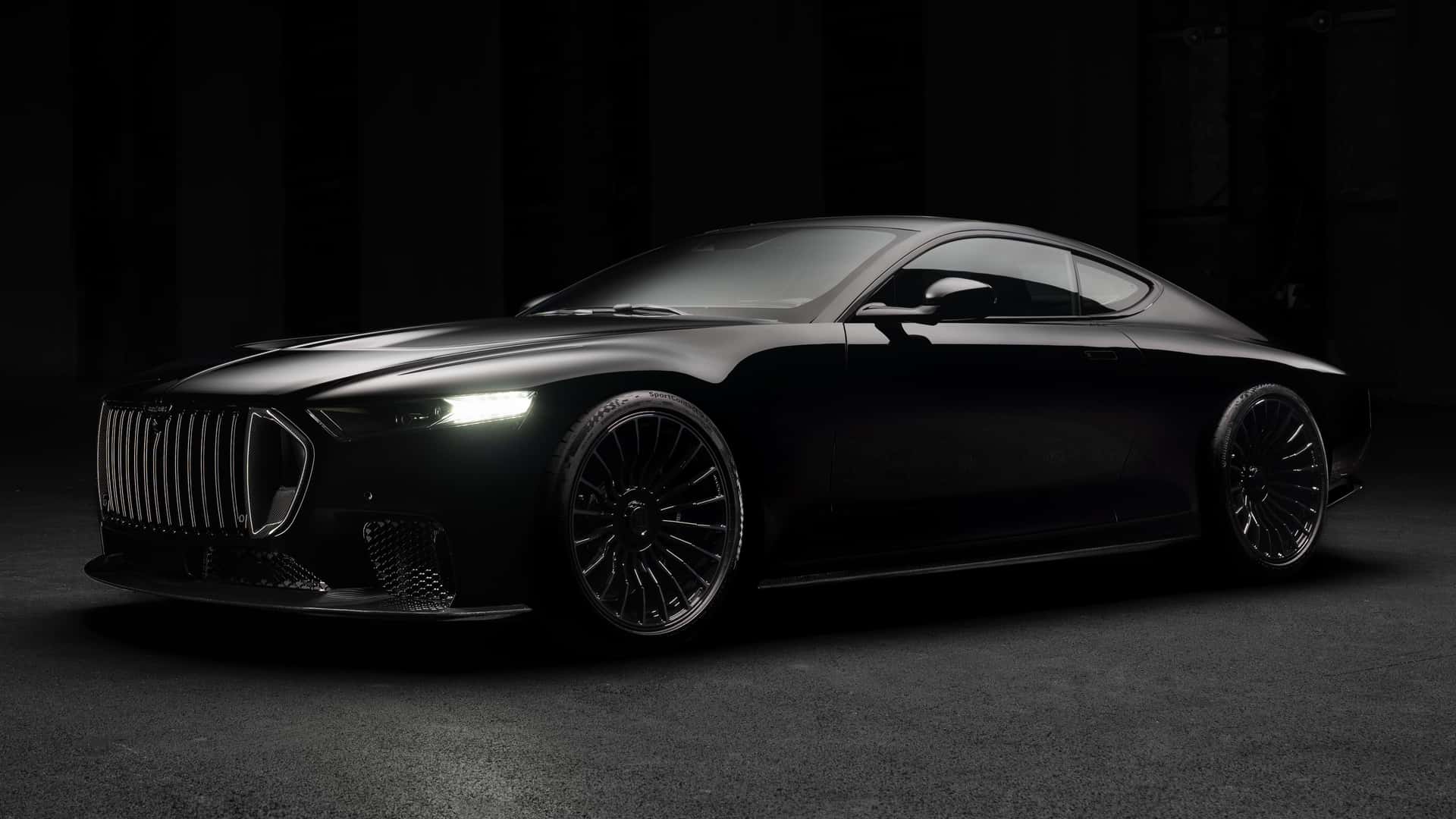
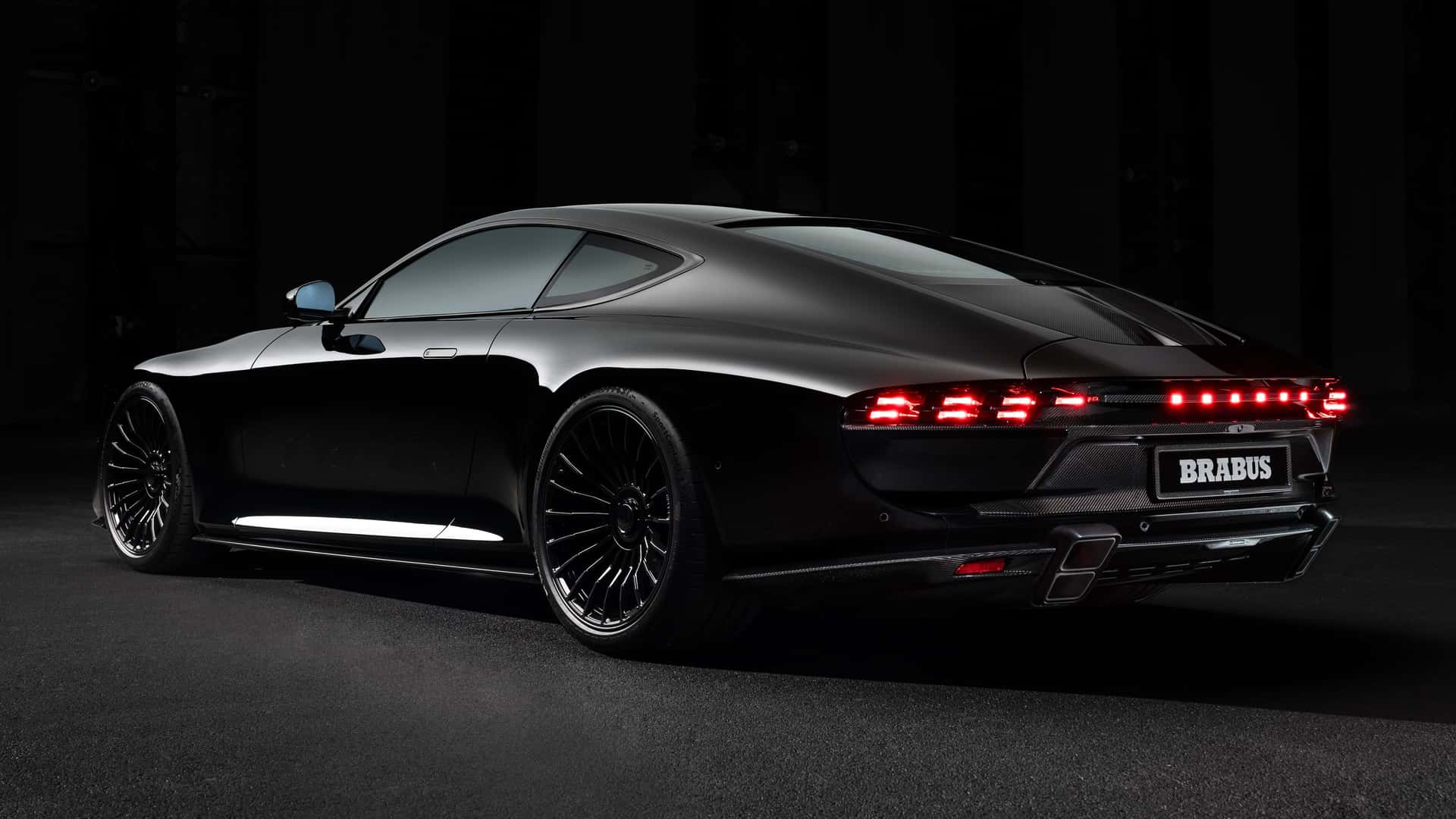
You can feel that shift in the proportions. The car is described by BRABUS as a 2+2-seater Gran Turismo coupe, and the design brief seems aimed at a different kind of pace. Not the brutal, short-burst drama of a quarter-mile hero, but the high-speed, cross-continent confidence of a machine built to settle into the horizon. In the available press imagery, the long hood, wide track and dark surfacing underline that mood perfectly.
Brabus Bodo Performance: V12, 1,000 hp, 360 km/h
Under the skin, the facts are unusually concrete for such an emotional launch. BRABUS states that the Brabus Bodo uses a hand-built 5.2-liter V12 biturbo engine with two specially developed turbochargers, a RAM-AIR airbox and high-efficiency intercooling. Peak output is given as 735 kW, or 1,000 hp, with maximum torque of 1,200 Nm available from 2,900 to 5,000 rpm.
The rest of the performance data reads like a serious modern super-GT brief. BRABUS quotes 0 to 100 km/h in 3.0 seconds, 0 to 200 km/h in 8.5 seconds and 0 to 300 km/h in 23.9 seconds. Top speed is electronically limited to 360 km/h. Power goes to the rear wheels through an eight-speed automatic transmission, while an electronic differential can lock with up to 100 percent effect when traction demands it.
The chassis details also support the grand touring character rather than reducing the car to a headline number. BRABUS specifies 21-inch forged Monoblock Z-GT “Shadow Edition” wheels, 275/35 ZR 21 tires at the front and 325/30 ZR 21 at the rear, plus a suspension setup with a double-wishbone front axle and a multi-link rear. Five driving modes and a front-and-rear lift system that raises the car by around 25 millimeters complete the package.
Inside the Cabin, the Story Slows Down
The cabin is where the car’s report-card facts give way to something more intimate. According to BRABUS, the interior is trimmed in smooth black leather and contrasting black Nubuck, with carbon-fiber elements on the steering wheel, dashboard, center console and door panels. The atmosphere is technical, but not cold. It is meant to be lived with over distance.
More telling are the details that tie the machine back to its namesake. BRABUS says the door panels carry the embroidered signature of Bodo Buschmann, while the seat backrests feature the silhouette of the car itself. There are also bespoke accessories for owners, including a matching leather weekender bag and a blockchain-based Digital Product Passport integrated into a dedicated spec plate in the luggage compartment. In a market full of loud claims, that mix of craft and ritual gives the Brabus Bodo a distinct identity.
From Dream Car to Real Experience
Most readers will never sign an order form for a seven-figure coachbuilt GT, but the appeal of a car like this is still deeply practical in one sense: it sharpens your idea of what fast driving is supposed to feel like. At DRIVAR, that bridge from poster car to real experience is exactly where the fun begins. Instead of admiring performance only through numbers, you can move closer to the sensation itself through curated supercar drives, passenger experiences and event formats built around serious machinery.
That matters because cars such as the Brabus Bodo do not fascinate only because of brand mythology. They fascinate because they promise force, response, noise, control and speed in one concentrated object. If you want to understand why high-performance GTs and supercars capture people so completely, the smartest route is not abstract debate but seat time in the right environment, with clear processes, professional support and a focus on safety from the first briefing to the final cooldown.
The Brabus Bodo feels like a family name turned into a 360-km/h grand tourer.
Conclusion
The Brabus Bodo matters because it brings together three stories at once: the biography of Bodo Buschmann, the evolution of BRABUS from tuner to broader luxury-performance manufacturer, and the enduring appeal of the V12 grand tourer in an era of rapid change. The numbers are strong, but the symbolism is stronger.
If you strip away the social-media noise, what remains is a genuinely interesting car with verifiable substance: 1,000 hp, 1,200 Nm, 3.0 seconds to 100 km/h and an electronically limited 360 km/h top speed. More than that, it is a reminder that in the performance world, the machines that stay with you are often the ones that carry a story worth telling.
Frequently asked questions
What is the Brabus Bodo?
The Brabus Bodo is a coachbuilt 2+2 grand touring supercar from BRABUS. It is named after company founder Bodo Buschmann and is positioned as a tribute model as well as a milestone for the brand.
How much power does the Brabus Bodo have?
BRABUS states that the car produces 1,000 hp and 1,200 Nm from a hand-built 5.2-liter V12 biturbo engine. Official figures also include 0–100 km/h in 3.0 seconds and a top speed limited to 360 km/h.
Is the Brabus Bodo a Mercedes-based car?
BRABUS itself presents the Bodo as its own coachbuilt supercar and focuses publicly on the model’s design, engineering and tribute concept. Some third-party reports discuss its technical basis, but if you want the safest wording, the official BRABUS position is that it is a coachbuilt BRABUS Gran Turismo coupe.
Why is it called Brabus Bodo?
The name refers to Bodo Buschmann, the founder of BRABUS. That makes the car more than a product label: it is meant to connect the brand’s current flagship ambitions with the person who shaped its early identity.