
The most valuable cars in 2026 sit at the intersection of rarity, racing history, and documented provenance. This top 10 ranking looks at the sales and value benchmarks that define the summit of the collector-car world.
Some of these icons set hard auction records, others shape the wider conversation about what automotive history is worth at the very highest level. Either way, they show that in this market, proof matters more than hype.
10Duesenberg SSJ
If you want to understand the most valuable cars at the top of the market, start with pre-war Americana. The Duesenberg SSJ sits lower in this ranking by price, but it still occupies rarefied air because it represents a different kind of automotive importance: coachbuilt exclusivity from an era when performance and prestige were inseparable. Its 2018 sale at 22 million US dollars remains a benchmark for pre-war collector cars.
Only two SSJs were built, which immediately changes the valuation logic. Scarcity matters, but so does the story around the car, and the SSJ has the kind of provenance that serious collectors chase for decades. In a list filled with racing legends from Europe, this car earns its place by showing that the most valuable cars are not all mid-century Italian or German competition machines.
9Ferrari 250 GTO
Ninth place belongs to the Ferrari 250 GTO, a model that has become shorthand for blue-chip collecting. One example sold publicly in 2018 for 48.405 million US dollars, a result that underlined just how durable demand is for the GTO name. Even years later, that figure still defines the upper edge of the classic Ferrari market.
What keeps the GTO so high is not only its design or performance, but the way its identity blends motorsport, rarity, and myth. When collectors talk about the most valuable cars, this Ferrari is always part of the conversation because it sits at the crossroads of competition history and universal desirability. You can trace a straight line from its racing pedigree to its market strength.
8Ferrari 330 LM/250 GTO
In eighth comes the Ferrari 330 LM/250 GTO, sold in 2023 for 51.705 million US dollars. That result pushed it ahead of the 2018 Ferrari 250 GTO auction figure and confirmed that the very best Ferrari competition cars still command extraordinary money when the specification and history align. It is one of those cases where nuance matters: not every GTO story is the same, and collectors pay for distinction.
This particular car stands out because it ties the GTO legend to factory competition history in a more specific way than many others can claim. That is why rankings of the most valuable cars are never only about badge prestige. They are about the exact chassis, the exact record, and the exact paper trail that proves why one car rises above another.
7Mercedes-Benz W 196 R Stromlinienwagen
Seventh place goes to the Mercedes-Benz W 196 R Stromlinienwagen, which sold in 2025 for 51.155 million euros. That made it the most valuable Grand Prix car ever sold at auction and instantly one of the headline results of the decade. In collector terms, it is the kind of number that resets expectations for historically important single-seaters and streamliners alike.
This is where motorsport pedigree becomes almost impossible to separate from value. A car like the W 196 R does not need road-car glamour to reach the summit of the most valuable cars market. It carries Grand Prix history, engineering significance, and the aura of Mercedes’ competition legacy, all of which translate into extraordinary demand among top-tier buyers.
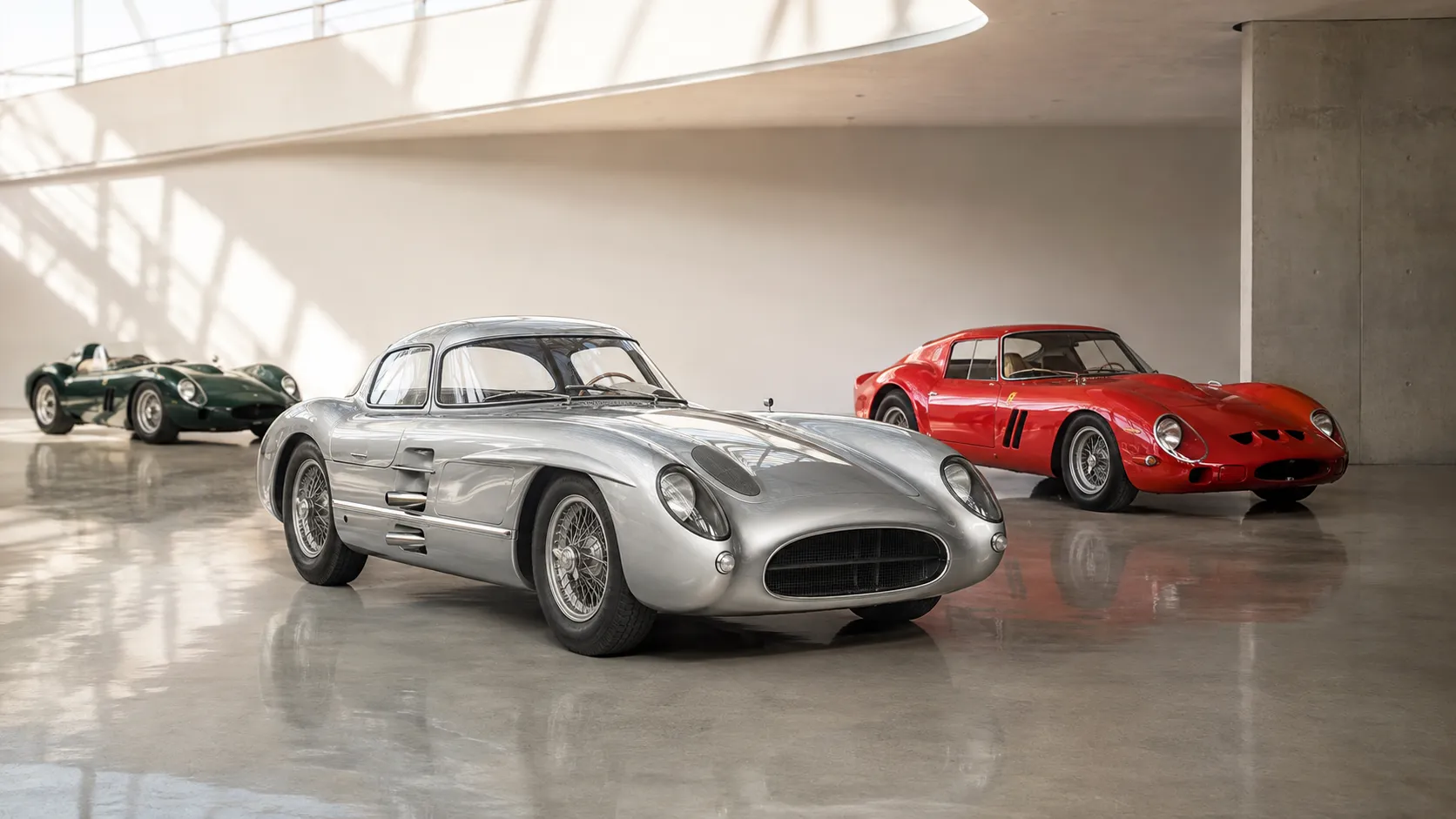
6Mercedes-Benz 300 SLR Uhlenhaut Coupé
Sixth place is reserved for the Mercedes-Benz 300 SLR Uhlenhaut Coupé, and even that sounds strange because by confirmed sale price it actually stands above the rest. It sold in May 2022 for a record 135 million euros, a figure that made it the most valuable car in the world by documented transaction. In this ranking, its position acts as a bridge between verified record sales and the broader 2026 conversation around market value, legacy, and collectability.
The car is one of only two prototypes, which already places it beyond normal rarity. Add its direct connection to Rudolf Uhlenhaut and its status within Mercedes-Benz history, and you have a machine that feels closer to movable cultural heritage than to a collectible object. If you want a reference point for the most valuable cars, this is the benchmark, and Mercedes-Benz’s own account of the Uhlenhaut Coupé sale explains why the record still resonates.
5Provenance over performance
Fifth place is where the logic of this list becomes clear: value at the top end is not linear. Cars can sit close together in mythology while remaining far apart in public price records. The Ferrari 250 GTO family, the Mercedes racing icons, and exceptional pre-war machines all prove that the most valuable cars are judged by context as much as by raw transaction numbers.
Collectors are not simply buying horsepower, styling, or even rarity in isolation. They are buying the strongest version of a story that can be verified and defended. That is why every car in this upper half matters: each one represents a moment where history, scarcity, and market confidence meet.
4The power of documented sales
Fourth place belongs to the role of public auctions themselves. In 2026, the collector world still relies on marquee auction houses to set transparent benchmarks for the most valuable cars. Without those headline sales, the market would be dominated by rumor and private whispers, which makes it harder to compare one legend with another.
That transparency is also why the documented results from RM Sotheby’s and Gooding Christie’s matter so much in this ranking. A published hammer price does more than make headlines; it anchors future expectations. For enthusiasts, it turns abstract prestige into something measurable.
3Racing history changes everything
Third place is really a lesson in why racing history carries such weight. The upper end of this ranking is packed with factory-backed competition cars because race results, period significance, and famous drivers create a level of legitimacy that road-going luxury alone cannot match. This is where the most valuable cars separate themselves from merely expensive classics.
You can see that pattern across Mercedes and Ferrari alike. Championship-era engineering, Le Mans connections, and original competition use give collectors something more durable than fashion. Markets move, but deeply documented motorsport history tends to hold its authority.
2Why these icons still matter to enthusiasts
Second place goes to the dream factor. Most people will never bid on a 250 GTO or a 300 SLR, but the fascination these cars create is the same force that draws enthusiasts toward driving experiences, track days, and iconic marques in the real world. The most valuable cars may live in museums, collections, and elite auctions, yet their appeal starts with emotion behind the wheel.
That is exactly where DRIVAR closes the gap between collector mythology and experience. If these icons make you want to feel performance rather than just read about it, discover supercar experiences with DRIVAR and explore what it is like to drive or gift a memorable performance-car moment with clear booking steps and a strong focus on safety.
1The real reason values go stratospheric
First place belongs to the central insight behind the entire ranking. In 2026, the most valuable cars are not defined purely by beauty, speed, or brand prestige. They reach the top because they combine documented history, tiny production numbers, originality, and a provenance chain strong enough to withstand the scrutiny of the world’s most demanding collectors.
That is why the headline figures matter, but the underlying story matters more. The ranking of the most valuable cars in 2026 shows one thing above all: at the summit, verified history is worth more than horsepower alone. Racing success, rarity, originality, and a complete pedigree push values into territory far beyond conventional luxury.
At the very top of the market, history is worth more than horsepower alone.
Conclusion
The ranking of the most valuable cars in 2026 makes one point unmistakably clear. At the top, value is driven less by prestige alone and more by documented history that can be proven chassis by chassis.
Racing victories, tiny production numbers, originality, and an unbroken provenance chain are what push these cars beyond ordinary luxury. That is why the very top of the market remains so fascinating: every record price is really a verdict on historical significance.
| Facts & Figures | |
|---|---|
| Mercedes-Benz 300 SLR Uhlenhaut Coupé record sale (2022) | 135 million euros |
| Mercedes-Benz W 196 R Stromlinienwagen sale (2025) | 51.155 million euros |
| Ferrari 330 LM/250 GTO sale (2023) | 51.705 million US dollars |
| Ferrari 250 GTO sale (2018) | 48.405 million US dollars |
| Duesenberg SSJ sale (2018) | 22 million US dollars |
Source: Mercedes-Benz Group – Uhlenhaut Coupé
Frequently asked questions
What is the most valuable car in the world in 2026?
Based on publicly documented sales, the 1955 Mercedes-Benz 300 SLR Uhlenhaut Coupé remains the most valuable car associated with a verified transaction. It sold in May 2022 for 135 million euros. That figure still towers above every other confirmed auction result in this ranking.
Why are Ferrari 250 GTOs among the most valuable cars?
The Ferrari 250 GTO combines extreme rarity, racing success, and a collector status that has been built over decades. Publicly documented sales include 48.405 million US dollars for one example in 2018 and 51.705 million US dollars for the 330 LM/250 GTO derivative in 2023. In this market, provenance matters as much as engineering.
Are these the most expensive cars ever sold or estimated values?
This list focuses on a mix of documented public sale prices and widely referenced 2026 value positioning for the collector-car elite. Wherever a hard public sale figure is available from the provided fact base, that number takes priority. Estimated private values can be even higher, but they are often less transparent than auction records.
What makes a car become one of the most valuable cars?
The biggest drivers are usually racing history, very low production numbers, originality, and a traceable ownership story. Cars connected to factory competition programs or famous drivers tend to lead the market. Condition alone is rarely enough without a strong historical narrative.